

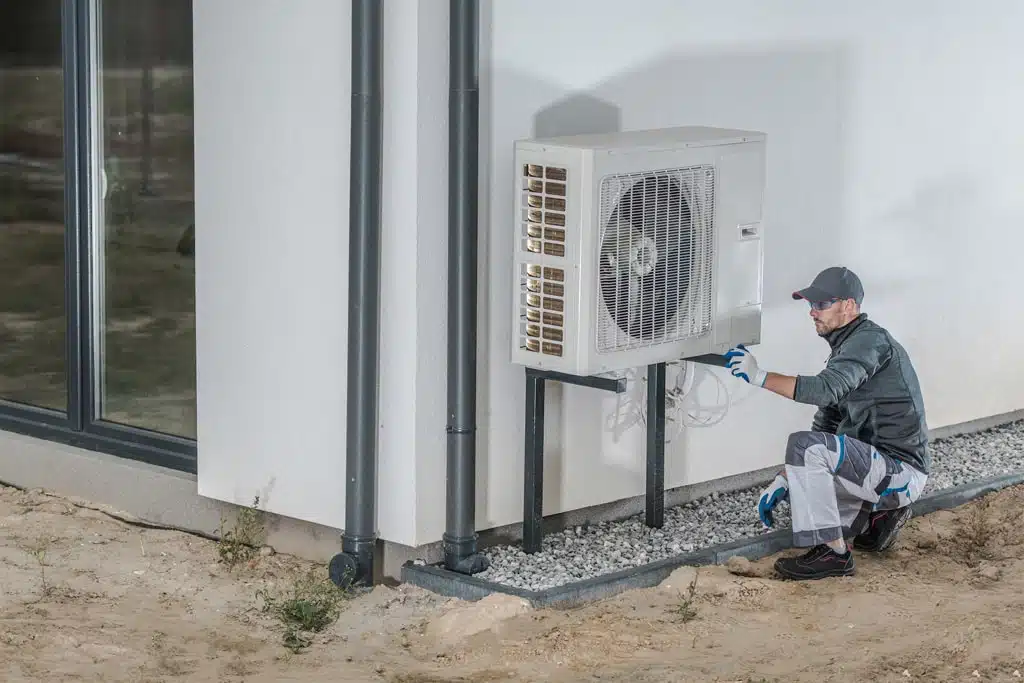
5 tips for installation companies in preparation for the new heating installation standards of 2026
The Cabinet has announced that, starting in 2026, the hybrid heat pump will become the standard for heating homes when the central heating boiler is due for replacement. This decision by the Cabinet forces installation companies to prepare and adapt their current working methods where necessary. As an installation company, we would like to offer you five tips for preparing for the new standards for heating installations in 2026.
What does the Cabinet’s new standardization for central heating boilers mean?
The Cabinet announced on May 17, 2022, that the hybrid heat pump will become the standard for heating homes starting in 2026. This means that as soon as a central heating system needs replacing, people must switch to a more sustainable alternative. In most cases, this will be a hybrid heat pump, but a fully electric heat pump or a connection to the district heating grid is also a possibility. The Cabinet made this decision because the urgency of making homes more sustainable is great, and the pace needs to be accelerated. Furthermore, it is ultimately better for everyone’s wallet if we use less natural gas.
1. Ensure insight into the type of heating system installed
In recent years, sustainable alternatives for heating systems have entered the market, meaning installation companies now have to deal with multiple types of installations. Regardless of whether you already work with heat pumps, you can no longer ignore this under the government’s new regulations. It is becoming increasingly important for you to know which heating system is installed at the customer’s location, as each type requires different maintenance. You will work inefficiently if you do not know which heating system is installed and have to find this out from the customer before every repair or maintenance request. This becomes even more problematic if the technician is sent to the customer without this knowledge and only discovers it on site.
2. Maintain control over your material flows
Because your installation company handles multiple types of installations, your material flow also becomes more complex. After all, multiple types of installations require more components. Ensure that you always stay up to date on your current stock and delivery times. In the current climate of long delivery times, our professionals regularly see installation companies run into problems due to a lack of control over their material flows and inventory management. As a result, installation companies run out of stock of certain parts, preventing them from executing orders and sometimes even leaving them without work, whether temporarily or permanently.
3. Map out the responsibilities per technician
As mentioned in tip 1, every type of heating system requires different maintenance, and this naturally applies to the installation itself. A different type of installation and maintenance, in turn, requires different knowledge from your technicians. For central heating boilers, the new Gas Boiler Act even stipulates that only technicians with CO certification are permitted to work on them. It is therefore crucial that you map out each technician’s qualifications so that the technician with the correct authorizations is scheduled for a job. After all, you want to avoid at all times a situation in which a technician arrives at a job, discovers they are not authorized, and subsequently has to leave without performing any work.
4. Know which materials are present in the service van
As mentioned earlier, multiple installation types result in a wider variety of parts. This affects not only your material flows but also the parts present in the service van. Ensure that you know which parts are available in the service vans. It wastes unnecessary time if on-site technicians discover they do not have the correct parts to perform installation or maintenance, and therefore have to return later.
5. Digitize and optimize your work processes
The overall conclusion is that, as an installer, you must start digitizing and optimizing your work processes at the right time to ensure that the supporting organization does not get out of hand. It is a fact that work preparation is becoming increasingly complex due to the advent of various heating systems. To counteract this, you must choose ERP software for installation companies that supports your work processes and scales with you as needed.
Are you curious how software can optimize your work processes?
Linde van der Velde
+31858200802
info@bluace.nl