

Tips for a successful remote ERP implementation
We are living in a time when your company may be forced to slow down or interrupt activities. However, it is also possible that demand for your product or service is higher than before. It is important to keep a close eye on ongoing projects, planning, and operations.
The current times force you to reflect. What is the status of my current automation? Are my business processes set up efficiently? Is my business model still up to date and prepared for the future? Is my organization competitive? These are questions you are likely dealing with right now. This is happening while we are all paying extra attention to our family and friends and working remotely whenever possible. The digital transition is accelerating during this period. This provides new insights and, certainly, new opportunities.
Perhaps you had planned to implement, configure, or replace your ERP system this year and are asking whether this project is still feasible. Is this the right moment to undertake a complex internal change? Is it even possible to complete a remote ERP software implementation? And if so, how?
What you might not know is that the majority of the implementation was normally already done remotely. With our cloud-based solution, processes are easy to set up and adapt. As a result, we now guide companies with a successful Microsoft Dynamics platform that can be fully configured remotely. These are essential tips if your company wants to implement an ERP system in the short term and prepare your organization for this digital transition.
1. Know the strengths of your team
Every company is different, and only you and your team can determine if now is the right time to implement ERP software. Naturally, an ERP implementation requires an investment of money, time, and resources. But if done correctly, it streamlines all your operations. From quotation and order processing, with a faster product or service delivery, to efficient inventory management, shipping, installation, service, and preventive maintenance contracts. This is further complemented by well-structured financial administration and BI reporting, which provides trends and key management information so that you can make the right choices.
Before you decide to proceed with an ERP implementation, you must be certain that you know your team’s strengths. What is your team’s capacity to take on additional tasks? Who is leading the project? Some companies find that many people have more time available for projects because large parts of their teams are working from home. By undertaking an ERP implementation now, you ensure that your company is well-positioned for growth when the world eventually returns to normal working life.
2. Embrace current technology
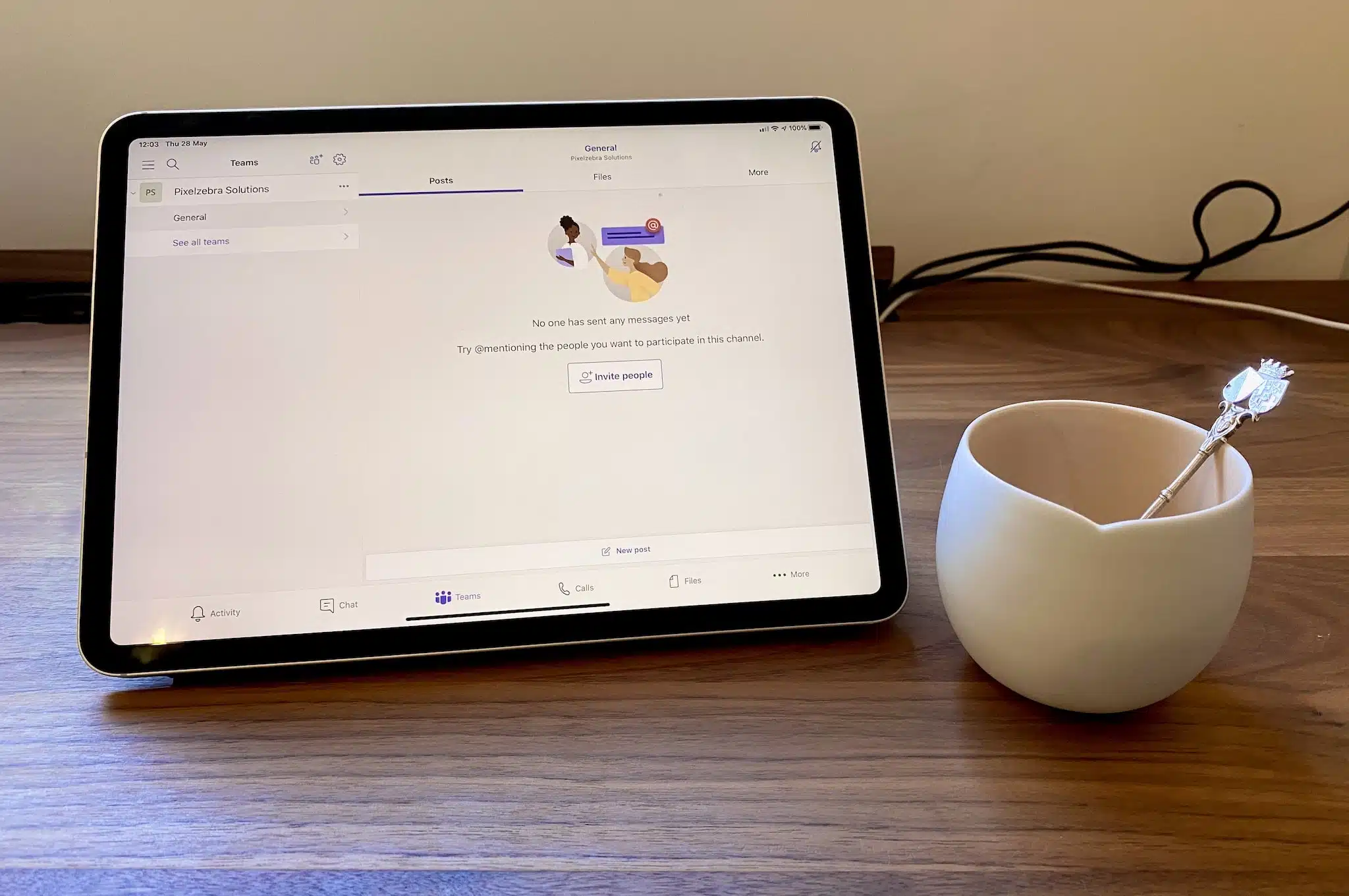
Although we have always carried out a large part of the implementation remotely, until recently we still sent consultants to the client’s location for crucial implementation events: the project start, training, and the go-live. Due to the current crisis, we are now conducting the entire process remotely using tools such as Microsoft Teams. This has brought a few unexpected benefits.
The start of the project
Previously, we sent our consultants to your branch for two to four working days. There were daily meetings with all your key team members. The goal of these meetings is to identify bottlenecks. Now, we reserve short sessions with the key user for each functional area, such as warehouse, purchasing, sales, finance, and the service department. Using time more efficiently leads to more focused and productive conversations.
The Training
Normally, your employees were assisted with setting up the new system and received targeted training from our consultants at your location. Now, we schedule only a half-day for this and use Microsoft Teams to help your employees set up the new solution. There is still room to provide feedback and resolve issues. We have found that this process is just as effective in this virtual environment as it is on-site.
The Go-Live
Previously, we sent our consultants to your location to support you with the conversion to the new software and its live use. Currently, our team members are always available via the support hotline. You can share and discuss all your questions or discussion points at any time. In addition, we schedule 15-minute meetings with each key user in every functional area to review everything and address issues. Both the hotline and the stand-up meetings are extremely efficient, thanks in part to our years of experience. The digital way of working helps us prioritize issues and stay focused on overall go-live goals.
An ERP implementation is a major undertaking for your entire team, but it is a valuable investment if executed well. With the proper use of current technology and your team’s perseverance, you can effortlessly achieve a fast, successful remote ERP launch.
Interested in more information about all the possibilities?
Our team is happy to provide tailored, no-obligation advice.
Mark Landman
+31858200802
info@bluace.nl